AGE OF WAR











SIMILAR GAMES


























Description


Age of War - All Games Github - AGG
About Age of War - All Games Github - AGG
We delve into the captivating world of Age of War, a series that has captured the imagination of gamers seeking strategic depth and engaging progression. This article serves as a comprehensive guide to Age of War, exploring its various iterations and the accessibility it finds through platforms like Github. Our aim is to provide an in-depth look at what makes these games so enduring and how enthusiasts can discover and engage with them. We understand the significant interest surrounding Age of War and its presence on developer-centric platforms. This exploration is designed to be the definitive resource for anyone looking to understand the scope and availability of the Age of War games.
The Enduring Appeal of Age of War
The core appeal of the Age of War series lies in its elegantly simple yet profoundly strategic gameplay. Players are tasked with guiding their civilization through distinct historical eras, from the earliest primitive stages to futuristic advancements. The progression is not merely cosmetic; each era introduces new units, technologies, and defensive structures, forcing players to adapt their tactics constantly. The resource management, unit deployment, and defensive planning elements combine to create a compelling loop of attack and defense that is both addictive and rewarding. The visual evolution of units and environments across the ages further enhances the sense of progress and achievement. Many players are drawn to the satisfying feeling of watching their humble beginnings transform into a formidable, technologically advanced war machine. The ability to experiment with different unit combinations and upgrade paths offers significant replayability. The dynamic nature of combat, where the tide can turn with a single well-timed offensive or a crucial defensive stand, keeps players on the edge of their seats. This constant push and pull, this strategic dance of dominance, is the heart of the Age of War experience.
Key Gameplay Mechanics in Age of War
At its heart, Age of War is a tower defense and offense hybrid. Players manage a base that generates resources and spawns various units designed to attack the enemy's base while simultaneously defending their own. The progression system is central: as players gain experience points from defeating enemies and completing objectives, they can unlock new eras. Each new era brings with it a host of advancements:
- New Units: From primitive clubs to advanced tanks and robots, the arsenal expands dramatically.
- Upgrades: Existing units can be improved, becoming more powerful, faster, or gaining special abilities.
- Defensive Structures: Towers, walls, and turrets evolve, offering better protection against increasingly formidable threats.
- Special Abilities: Powerful, limited-use abilities like airstrikes or defensive shields can turn the tide of battle.
The strategic decision of when to advance to the next era is crucial. Staying in an earlier era might allow for mass production of cheaper units, but it leaves players vulnerable to the advanced weaponry of later eras. Conversely, rushing to the future might grant access to devastating units, but at the cost of a potentially weaker early-game defense and a slower unit production rate.
Discovering Age of War on Github
The presence of games like Age of War on platforms such as Github signifies a vibrant community of developers and enthusiasts who are passionate about preserving, enhancing, and making these classic titles accessible. Github, while primarily known as a code repository, also serves as a hub for game development projects, fan-made remakes, and open-source initiatives. For Age of War, this means that players might find:
- Fan Remakes and Ports: Talented developers often recreate popular Flash games using modern engines, offering enhanced graphics, new features, and broader platform compatibility. These projects can breathe new life into beloved titles.
- Source Code Releases: In some instances, the original or modified source code for Age of War games might be shared, allowing other developers to learn from it, contribute to it, or even create their own unique versions.
- Community Projects: Collaborative efforts might be underway to expand the Age of War experience with new levels, units, or game modes.
Exploring Github for Age of War requires a degree of familiarity with navigating code repositories and understanding project documentation. However, the rewards can be significant, offering access to versions of the game that might be more stable, feature-rich, or playable on platforms where official versions are no longer readily available. The term AGG, in this context, often refers to communities or indexes that consolidate information about these games hosted on Github, acting as a gateway for players to find and download these community-driven projects.
Navigating Github for Age of War Projects
To effectively find Age of War related content on Github, users can employ specific search strategies. Utilizing keywords such as "Age of War," "Age of War remake," or variations thereof, combined with terms like "game," "project," or "engine," can yield relevant results. Many developers will include detailed README files that explain the project's status, how to build or run it, and what features are included. The community aspect is also important; active projects often have issue trackers and discussion sections where users can ask questions and provide feedback. The accessibility provided by these Github repositories ensures that the legacy of Age of War continues to thrive, allowing new generations of players to experience its strategic brilliance.
Exploring Different Iterations of Age of War
The Age of War series, while originating with a particular developer, has seen various iterations and expansions. Each installment typically builds upon the core mechanics, introducing new challenges and enhancing the player experience. The journey through time is a hallmark, with players progressing through distinct epochs:
- Early Eras: Focusing on primitive warfare, with basic units like spearmen and archers. Defense relies heavily on simple fortifications and overwhelming numbers.
- Medieval Eras: The introduction of cavalry, siege weapons, and more organized formations. Fortifications become more robust.
- Industrial Eras: Advanced weaponry, firearms, and early mechanized units appear, demanding quicker reaction times and more complex battlefield strategies.
- Modern and Futuristic Eras: High-tech units, aerial assaults, and powerful superweapons change the face of warfare, requiring players to master advanced tactics and defenses.
The progression is not linear in terms of difficulty; rather, it's a constant evolutionary arms race. Players must continually weigh the benefits of upgrading existing units against the cost and time required to unlock entirely new, more potent units from the next era. This dynamic system ensures that no single strategy remains dominant for long, forcing constant adaptation and strategic foresight. The satisfaction derived from successfully navigating these transitions and overwhelming an opponent with a technologically superior force is a significant part of the game's enduring appeal. The careful balance of offense and defense, resource management and unit deployment, makes each game a unique strategic puzzle.
The Impact of Community Contributions
The availability of Age of War games and their related projects on platforms like Github is a testament to the power of community involvement. Developers who host their projects there often do so with the intention of fostering collaboration and enabling broader access. This can manifest in several ways:
- Bug Fixes and Patches: Community members can identify and report bugs, leading to more stable and polished versions of the game.
- Feature Enhancements: Enthusiasts might contribute new units, levels, or gameplay mechanics, expanding the scope of the original game.
- Platform Ports: Developers can adapt games to run on different operating systems or devices, making them accessible to a wider audience.
- Documentation and Tutorials: Community members often create guides, wikis, and tutorials, helping new players understand the complexities of the game and how to contribute.
This collaborative environment ensures that the spirit of Age of War is kept alive and evolves. The term AGG often signifies a curated collection or a community effort to organize and present these various Github-hosted projects, providing a centralized point of access for fans. The detailed nature of these community-driven efforts means that players can often find versions of Age of War that are more feature-rich and better supported than older, official releases. This collaborative spirit is vital for the long-term preservation and enjoyment of beloved game titles.
Understanding the AGG Context
The acronym AGG, when discussed in conjunction with Age of War and Github, generally refers to a community-driven initiative or an index aimed at consolidating information and access to various Age of War related projects hosted on Github. This could be a specific repository, a website, or a forum where enthusiasts share links to fan-made remakes, source code, playable versions, and development updates. For players looking to engage with the Age of War series through these community channels, AGG acts as a helpful directory. It simplifies the process of discovering different versions, understanding their developmental status, and finding instructions on how to download or play them. The existence of an AGG underscores the active and dedicated community surrounding the Age of War games, ensuring their continued accessibility and evolution beyond their original release platforms. It represents a collective effort to keep the strategic challenges and evolutionary progression of Age of War available for all to enjoy and contribute to. The comprehensive nature of these community hubs means that players can often find detailed information about the specific changes and improvements made to each version, helping them choose the experience that best suits their preferences. This organized approach is invaluable for anyone seeking the most current and feature-complete versions of the game.
The Future of Age of War Development
The ongoing development and accessibility of Age of War games through platforms like Github suggest a bright future for the series, driven by passionate creators and a dedicated player base. The collaborative nature of open-source development allows for continuous improvement, innovation, and the potential for entirely new interpretations of the core concept. As technology advances, we can anticipate seeing Age of War projects with enhanced graphics, more complex AI, expanded multiplayer capabilities, and perhaps even new gameplay mechanics that push the boundaries of the genre. The community's commitment to preserving and evolving these games ensures that the strategic depth and satisfying progression of Age of War will remain accessible for years to come. The AGG initiatives play a crucial role in this ecosystem, acting as vital connectors between developers and players, fostering collaboration, and ensuring that the legacy of Age of War continues to grow and thrive. We are excited to see how these community efforts will shape the future of this beloved strategy game series.
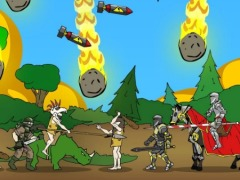
Age of War is a captivating blend of strategy and defense where players lead their civilizations through multiple eras of human history, battling against a relentless opponent determined to topple their empire. Starting in the Stone Age, players must manage their resources to train units, build defenses, and advance their civilization’s technology to progress through successive ages. Each era brings unique units and technologies, ranging from prehistoric cavemen wielding clubs to futuristic warriors armed with advanced weaponry. The game challenges players to balance offense and defense, strategically deploying units along a single battlefield lane to counter enemy forces and protect their own base.
Strategic Deployment and Technological Advancement
As players progress in Age of War, they must decide when and how to spend their resources on upgrading their capabilities and moving to the next age. Advancing through ages unlocks more powerful units and defense mechanisms, but also costs resources that could otherwise be used to deploy more units for immediate battlefield impact. Strategic timing is crucial, as players must fend off increasingly powerful waves of enemy attacks while trying to push back and destroy the enemy base. The game also features special attacks and abilities, which can be used to turn the tide of battle in critical moments, adding an additional layer of depth and strategy to the gameplay.
Age of War combines simple yet deep strategic elements with a seamless progression through historical epochs, making it a game that is easy to pick up but challenging to master. Players must constantly adapt their strategies to the evolving capabilities of their own and their opponent’s forces, making each playthrough a dynamic and engaging experience. Whether deploying dinosaurs or robots, the goal remains the same: evolve, outsmart, and conquer.