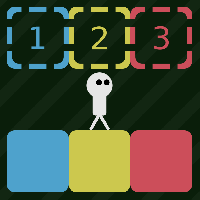
BLOCK TOGGLE







SIMILAR GAMES

















Description


Block Toggle - All Games Github - AGG
About Block Toggle - All Games Github - AGG
At **All Games Github**, we are dedicated to providing a comprehensive and ever-expanding repository of game development projects and resources accessible through the **Github** platform. Our mission is to empower developers, hobbyists, and game enthusiasts alike by offering a centralized location to discover, contribute to, and learn from a vast array of **games** and related **tools**. We believe in the power of open-source collaboration and strive to foster a vibrant community where innovation thrives. This detailed exploration delves into a specific facet of our platform: **Block Toggle**, a significant component within the **All Games Github - AGG** ecosystem, which aims to streamline and enhance the way users interact with and manage game assets and functionalities.
Understanding the Core Functionality of Block Toggle
The concept of a **Block Toggle** within game development, and specifically within the context of **All Games Github**, refers to a user interface element or a programmatic function that allows for the selective activation or deactivation of specific blocks of code, features, or graphical assets. This is particularly crucial in complex game projects where different modules might need to be enabled or disabled based on various factors such as platform compatibility, developer intent, player preferences, or experimental feature testing. Imagine a sprawling open-world game; the ability to toggle specific environmental elements, enemy AI behaviors, or even entire gameplay systems on or off can be invaluable for debugging, performance optimization, and the iterative design process. Our implementation of **Block Toggle** is designed with flexibility and ease of use at its forefront, ensuring that developers can effortlessly manage the intricate components that make up their **games**.
The Significance of Block Toggle in Game Development Workflows
In the fast-paced world of game development, efficiency is paramount. **Block Toggle** plays a pivotal role in optimizing development workflows by offering a sophisticated yet straightforward method for managing project complexity. Developers often work with modular game engines and libraries, and the ability to quickly switch between different configurations or disable non-essential modules can significantly speed up iteration cycles. For instance, when testing a new physics engine integration, developers might want to temporarily disable the existing one to isolate the new system's performance. Similarly, during the alpha or beta testing phases, specific **game** features might be toggled off to focus player feedback on core mechanics. The **AGG** (All Games Github) initiative understands these needs, and our **Block Toggle** solutions are crafted to be intuitive, allowing for rapid adjustments without requiring deep dives into intricate codebases. This empowers teams to be more agile and responsive to feedback and changing project requirements.
Technical Implementation and Architectural Considerations for Block Toggle
The technical underpinnings of **Block Toggle** can vary widely depending on the game engine, programming language, and architectural design of a particular **game**. However, common principles involve conditional compilation, feature flags, or runtime configuration systems. In the context of **All Games Github**, we aim to provide examples and templates that showcase robust and scalable implementations. For instance, using preprocessor directives in languages like C++ allows for code blocks to be included or excluded during the compilation phase, effectively toggling features before the **game** even runs. Alternatively, runtime configuration systems, often managed through data files or dedicated interfaces, allow for features to be toggled dynamically while the **game** is active. This is incredibly useful for live-service games where new content or events can be rolled out incrementally. Our **Github** repositories associated with **AGG** often feature well-documented examples of these techniques, providing developers with practical code snippets and architectural patterns to adopt. We prioritize clear, maintainable code that facilitates understanding and adaptation, ensuring that the **Block Toggle** functionality is not just present but also a well-integrated and efficient part of any **game** project hosted on our platform.
User Interface and User Experience Considerations for Block Toggle
Beyond the underlying code, the user interface (UI) and user experience (UX) associated with **Block Toggle** are critical for its practical application. A well-designed **Block Toggle** system should be intuitive and accessible, whether it's presented to end-users within the **game** itself or to developers within an editor or dashboard. For **game** developers, this might manifest as checkboxes, dropdown menus, or sliders within a development environment that clearly label the feature being toggled and provide immediate feedback on the state change. For players, a **Block Toggle** could be used to adjust graphical settings, enable accessibility options, or even opt into experimental **game** modes. The key is to present these options in a way that is not overwhelming and clearly communicates the impact of each toggle. **All Games Github** champions best practices in UI/UX, and the **Block Toggle** features we highlight and develop are designed with this principle in mind, aiming to enhance both the development process and the final player experience. We believe that even seemingly small functional elements like a **Block Toggle** can contribute significantly to the overall polish and usability of a **game**.
Examples of Block Toggle Usage in Various Game Genres
The versatility of the **Block Toggle** concept means it finds application across a wide spectrum of **game** genres. In **role-playing games (RPGs)**, **Block Toggle** could be used to enable or disable specific quest lines, companion AI behaviors, or even detailed character stat displays. For **strategy games**, it might control the visibility of complex resource management overlays, detailed unit information panels, or the invocation of powerful, resource-intensive abilities. In **action or shooter games**, **Block Toggle** could be employed to switch between different weapon loadouts, adjust the intensity of visual effects, or enable/disable specific environmental hazards. Even in **puzzle games**, a **Block Toggle** could be implemented to reveal hints, undo previous moves, or modify the difficulty parameters. The **All Games Github** platform hosts projects spanning all these genres, and the **Block Toggle** functionality serves as a common thread, illustrating its universal utility in refining **game** mechanics and player interaction. We encourage developers to explore how this adaptable feature can be integrated into their unique **game** concepts to enhance both development efficiency and player engagement.
The Role of Block Toggle in Accessibility and Customization
One of the most impactful applications of **Block Toggle** lies in its ability to significantly enhance **accessibility** and **customization** within **games**. By allowing players to toggle specific UI elements, control schemes, or sensory feedback, developers can cater to a broader audience with diverse needs. For instance, a **Block Toggle** could be used to enable larger text options, high-contrast color schemes, or alternative input methods for players with visual or motor impairments. Similarly, players who prefer a minimalist interface can toggle off unnecessary HUD elements, while those who enjoy deep dives into statistics can enable detailed displays. This granular control over the **game** experience is a hallmark of modern **game** design, and **Block Toggle** provides a fundamental mechanism for achieving it. **All Games Github** is committed to promoting inclusive **game** development, and our resources related to **Block Toggle** aim to provide developers with the tools and knowledge to build more accessible and customizable **games** for everyone.
Community Contributions and Future Development of Block Toggle at AGG
The spirit of **community** is at the heart of **All Games Github**, and this extends to the ongoing development and refinement of features like **Block Toggle**. We actively encourage contributions from our users, whether it's through submitting new implementations, suggesting enhancements, or reporting issues. The collaborative nature of **Github** allows for rapid iteration and the collective improvement of the resources we offer. We envision future developments of **Block Toggle** to include more sophisticated context-aware toggling, AI-driven suggestions for optimal toggling configurations, and seamless integration with advanced analytics platforms. By fostering a dynamic and engaged community, we aim to ensure that **Block Toggle** and other **game** development tools available through **AGG** remain cutting-edge and highly relevant to the evolving landscape of **game** creation. We invite all developers and enthusiasts to join us on this journey, contribute their expertise, and help shape the future of **game** development resources.
Play Block Toggle for free on All Games Github - AGG,
Unlock endless gaming excitement with All Games Github - AGG, the premier platform for thousands of top unblocked games across every genre. From thrilling action adventures and brain-teasing puzzles to relaxing casual titles, our expertly curated library delivers fun for every gamer. Enjoy ad-free, unblocked gaming with seamless, uninterrupted play, perfect for school, work, or downtime. Our browser-based games are 100% free, instantly accessible, and require no downloads. Dive into the ultimate free online games experience and explore a world of unblocked gaming designed for maximum enjoyment!
How to Play Unblocked Games on AGG: Getting started is simple! Visit All Games Github - AGG, browse our vast collection, and click on any game to play instantly in your browser. No sign-ups, downloads, or installations are needed—just pure gaming fun. Whether you're a beginner or a seasoned player, our intuitive platform ensures easy navigation and quick access to your favorite titles.
Controls for Unblocked Games: Game controls vary by title but are designed for accessibility. Most games use standard keyboard inputs (e.g., WASD or arrow keys for movement, spacebar for actions) or simple mouse clicks for point-and-click adventures. Some titles support touch controls for mobile or tablet users. Each game includes a brief instructions section or in-game tutorial to guide you. For specific controls, check the game’s description or help menu on AGG. Master the controls and dominate the leaderboards in no time!